

Logo shown is the property of Opus, used for identification purposes only.
Get Opus Pricing & Demo
Compare plans, book a live demo, and see how Opus fits your medical practice.
Opus is a cloud-based EHR and practice management platform designed for outpatient medical practices. It combines specialty-specific charting, scheduling, billing, telehealth, patient engagement and reporting in one system. It is built for practices that want a modern, configurable platform without the complexity of legacy systems. Tell us your specialty and we'll return current plan details.
Key takeaways
Opus is a cloud-based EHR and practice management platform designed for outpatient medical practices. It offers specialty-specific charting, scheduling, billing, telehealth, patient portal and reporting in a single system. Across public reviews the majority of feedback is positive, with users highlighting the modern interface and configurable workflows. Recurring criticisms include a learning curve during initial setup and the need to invest time in template customization.
See the plan that fits your practice
Share a few details and we'll send Opus pricing matched to your clinical needs.
Independent guidance
Software Finder is an independent software marketplace, not Opus, and not affiliated with or endorsed by them.
By submitting, you agree to Software Finder's Terms of Service and Privacy Policy and consent to be contacted by Software Finder and one or more matchedsoftware vendors (which may include Opus) about your request. You can opt out at any time.
Overview
What is Opus?
Opus is a cloud-based EHR and practice management platform built for outpatient medical practices. It combines clinical documentation with specialty-specific templates, scheduling for in-person and telehealth visits, billing and claims management, a patient portal with self-scheduling and online payments, and practice reporting. The platform is designed to be configurable so practices can adapt workflows to their specialty rather than forcing their workflow into a one-size-fits-all system.
Best for
Opus is best for outpatient medical practices, including family medicine, internal medicine, specialty clinics and multi-provider groups, that want a modern, cloud-based EHR with configurable specialty templates and integrated billing. Its standout element is the focus on specialty-specific charting and workflow flexibility.
Clinical documentation
How Opus handles clinical documentation
Opus provides specialty-specific charting templates that adapt to outpatient medical workflows. Providers can document visits with structured visit notes, quick-entry shortcuts and customizable forms that reduce the time spent navigating generic EHR screens.
- Specialty-specific charting templates
- Structured visit notes and quick-entry tools
- Customizable intake and assessment forms
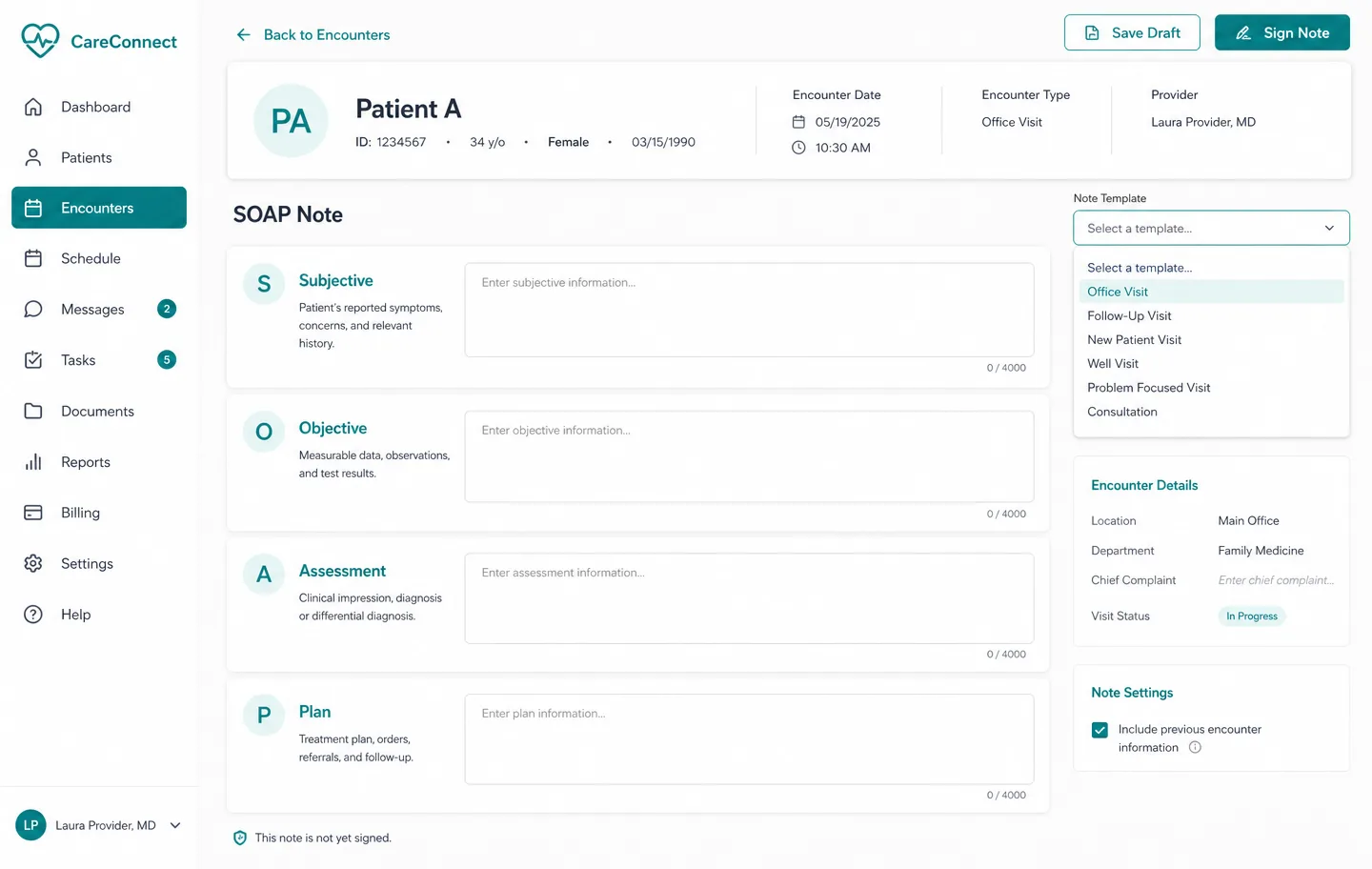
Screenshots sourced from Opus's publicly available materials and shown for identification and review purposes. Interface shown may differ from the current release.
Practice management
Scheduling, billing and RCM connected to the chart
Appointments, eligibility checks, claims, patient statements and payment posting run on the same platform as the EHR. Charge capture, automated claim rules and denial tracking are built in to reduce revenue leakage and administrative hand-offs.
- Online scheduling and automated reminders
- Electronic claims and ERA posting
- Billing, charge capture and denial tracking
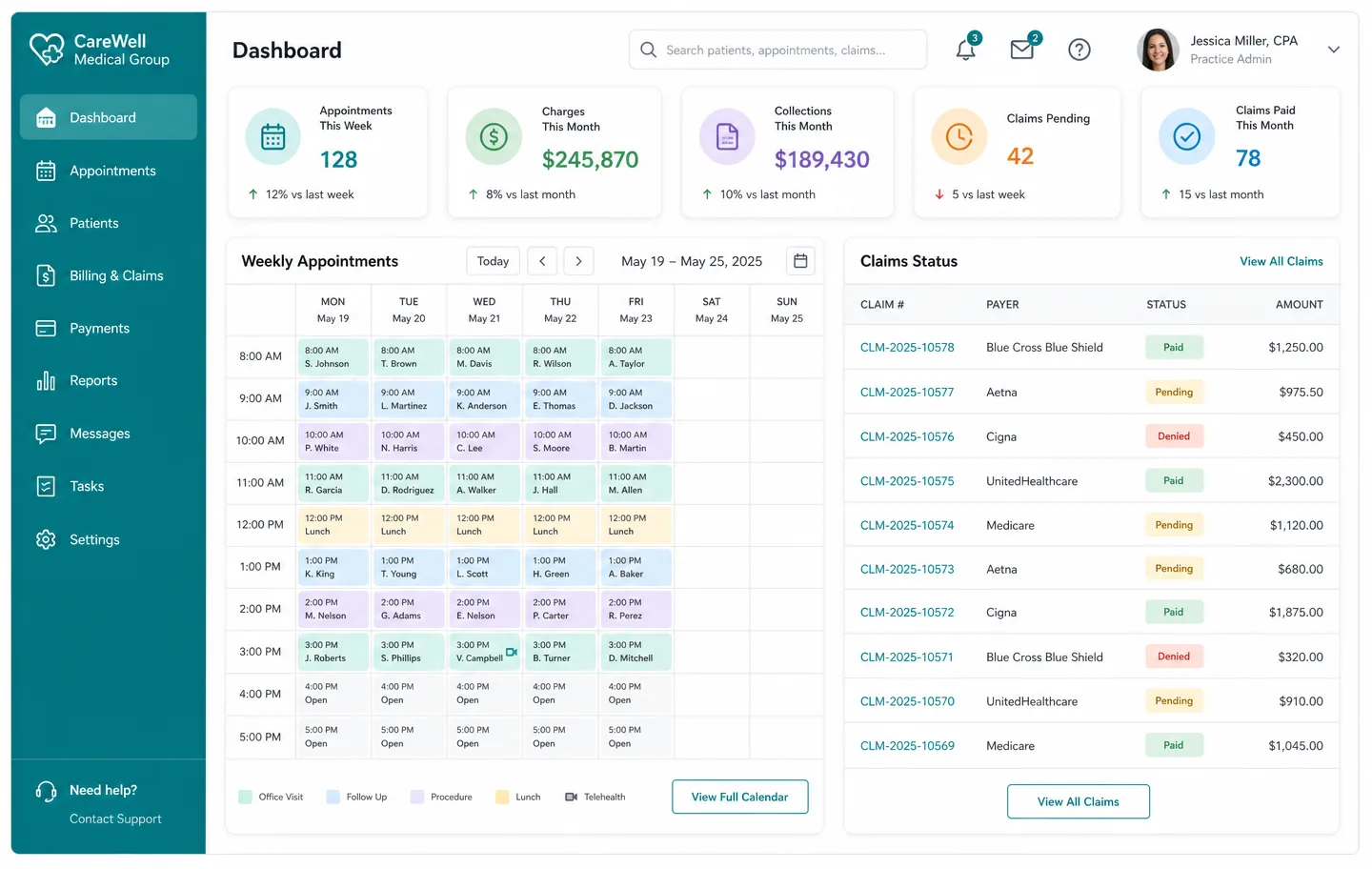
Screenshots sourced from Opus's publicly available materials and shown for identification and review purposes. Interface shown may differ from the current release.
Patient engagement
Portal, intake and telehealth for outpatient care
Opus includes a patient portal for self-scheduling, digital intake, secure messaging and online payments. Telehealth is integrated so providers can conduct video visits without leaving the platform, and appointment reminders help reduce no-shows.
- Patient portal with self-scheduling and intake
- Integrated telehealth video visits
- Automated reminders and online payments
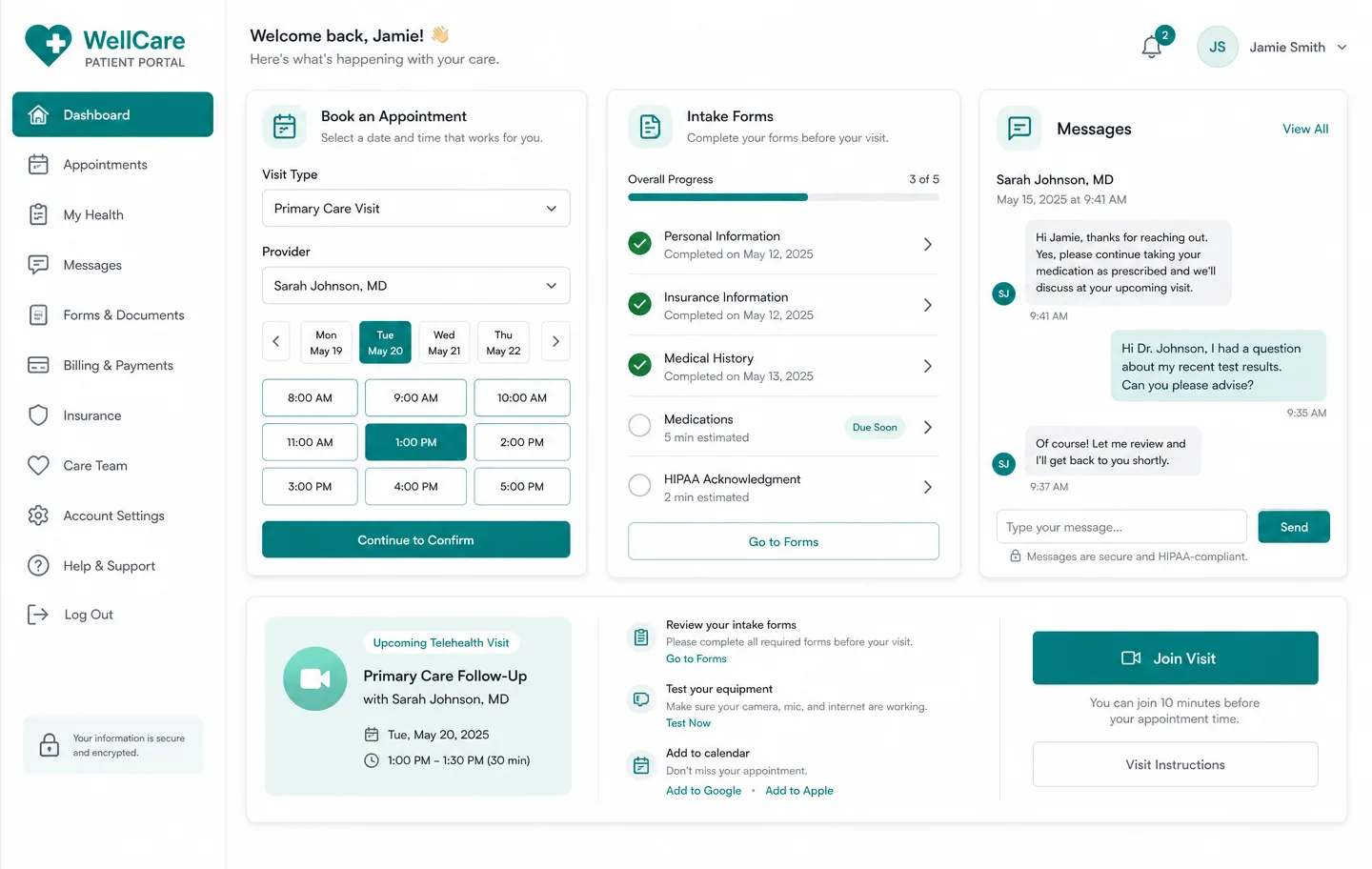
Screenshots sourced from Opus's publicly available materials and shown for identification and review purposes. Interface shown may differ from the current release.
Pricing
How much does Opus cost?
Opus is offered in tiered plans scaled for solo providers, group practices and larger medical organizations. Specific plan details is provided on request; a consultation is available.
Get PricingSolo provider plan
Core charting, scheduling and billing for individual practitioners.
Group practice plan
Adds multi-provider scheduling, advanced reporting and role-based access.
Enterprise plan
Full suite including premium support, custom integrations and advanced RCM for larger groups.
Across public reviews, Opus is generally described as a modern, user-friendly EHR with strong customization options. Users often praise the specialty-specific templates and the clean interface, while some mention that setup and workflow configuration require time to get right.
plan details references are based on publicly available third-party information and industry benchmarks. Actual costs may vary.
Who it's for
Who is Opus for?
Use cases
Common ways teams use Opus
Documenting specialty visits
Use specialty-specific templates and quick-entry tools to complete visit notes and assessments faster.
Managing scheduling and reducing no-shows
Set up online self-scheduling, automated reminders and multi-provider calendars connected to the clinical chart.
Billing and revenue cycle management
Submit electronic claims, post ERAs, verify eligibility and track denials from the same platform.
Engaging patients through the portal
Let patients book appointments, complete intake, send messages, pay online and join telehealth visits through one portal.
What users say
Aggregated from public reviews, sentiment toward Opus is largely positive among outpatient medical providers. Users value the modern interface, specialty-specific templates and the ability to configure workflows. The most common criticisms are the initial setup time and the learning curve for staff adapting to a new charting structure. Reviewers are most often physicians, practice managers and front-office staff at small to mid-size medical practices.
Features
Opus features
Capabilities listed on the official site, summarised in our own words. Exact availability varies by plan.
Specialty-specific charting
Templates and workflows designed for outpatient specialties rather than generic medical documentation.
Practice management
Scheduling, eligibility checks, claims, ERA posting and patient statements in one system.
Patient portal
Self-scheduling, digital intake, secure messaging, online payments and appointment reminders.
Integrated telehealth
HIPAA-compliant video visits built into the platform and tied to the clinical record.
Customizable forms
Build and modify intake, assessment and consent forms to match the practice's workflow.
Reporting and analytics
Practice performance dashboards, clinical reports and financial summaries.
Mobile-friendly design
Cloud-based access from desktops, tablets and mobile devices for flexible documentation.
Pros & cons
Opus pros and cons
Pros
- Modern, cloud-based platform
- Specialty-specific charting templates
- Configurable workflows and forms
- Integrated billing and RCM tools
- Patient portal with telehealth and payments
- Clean, user-friendly interface
Cons
- Initial setup and template customization takes time
- Learning curve for staff switching from legacy systems
- Smaller user community than some established EHRs
- Advanced integrations may require higher-tier plans
FAQ
Common questions about Opus
Request a demo
Share a few details and we'll help arrange a Opus walkthrough for your workflow.
Software Finder is an independent software marketplace, not Opus, and not affiliated with or endorsed by them.
By submitting, you agree to Software Finder's Terms of Service and Privacy Policy and consent to be contacted by Software Finder and one or more matchedsoftware vendors (which may include Opus) about your request. You can opt out at any time.
Next step
Still comparing options? See Opus in action.
Software Finder helps you gather the information that actually drives a software decision, a real walkthrough of Opus and a clear view of how it compares to similar platforms.
- See Opus in a live walkthrough
- Connect with the right team
- Compare against similar platforms
- Independent guidance